
Porcelain is a ceramic fired at very high temperatures, giving it a density and mechanical strength superior to earthenware or stoneware. However, this structural solidity does not protect the surface decorations: gilding, platinum fillets, and hand-painted patterns remain vulnerable to chemical and thermal aggressions from an automatic washing cycle.
Soil sensors and porcelain: why pre-rinsing is problematic
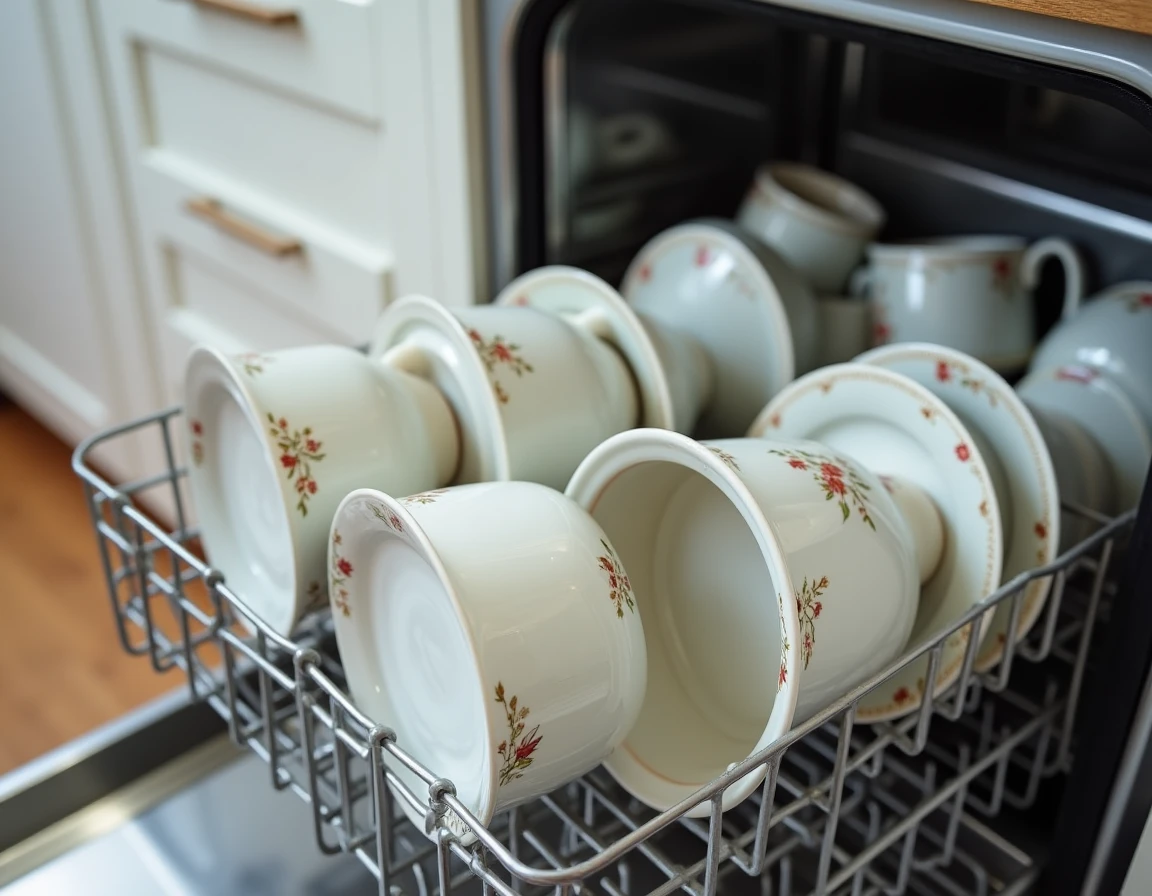
Recent dishwashers are equipped with soil sensors that analyze the turbidity of the water at the beginning of the cycle. These sensors adjust the temperature, spray pressure, and program duration based on the detected level of dirt.
Pre-rinsing porcelain under the tap before placing it in the machine seems logical for protection. The result is often the opposite: a pre-rinse misleads the sensors, which then trigger a cycle that is too gentle. The dishes come out poorly washed, requiring a restart of the program or manual scrubbing.
According to data relayed by the comparator Selectra, pre-rinsing under the tap can add 15 to 20 liters of water per cycle, sometimes more than the dishwasher’s own consumption. To find out whether porcelain can go in the dishwasher, the answer primarily depends on the type of decoration and the chosen program, not on prior rinsing.
The best practice is to remove large food residues with a spatula or absorbent paper, without running water. The sensors then have enough material to calibrate an appropriate cycle.
Delicate dishwasher program: temperature and spray pressure

The “delicate” or “fragile” programs of recent machines do not simply lower the temperature. They modify three parameters simultaneously: the water temperature, spray pressure, and total cycle duration.
The temperature should not exceed 45 to 50 °C for decorated porcelain. Beyond that, thermal differences between hot washing and rinsing cause micro-stresses in the glaze. These repeated stresses cycle after cycle eventually lead to cracking of the decorations or dulling of the gilding.
The washing arms of the latest generation appliances use optimized nozzles that reduce the force of the spray while maintaining cleaning efficiency. Plain white porcelain withstands a standard cycle well. Porcelain adorned with gold fillets, platinum, or hand-painted patterns always requires the delicate program.
Positioning items in the basket
The main risk in the machine is not chemical, but mechanical. Two porcelain plates colliding during a wash cycle produce microscopic chips on the edges. These chips weaken the piece and expose the body beneath the glaze to moisture.
Spacing each piece by at least one slot in the basket is enough to eliminate this risk. Cups and bowls should be placed tilted down in the upper basket, never flat, to avoid water stagnation at the bottom.
Gold and platinum decorations: what the detergent really attacks
Precious metal decorations (gold, platinum, silver) are the most sensitive to dishwashers. The problem arises not only from the temperature but also from the detergent itself.
Dishwasher tablets and powders contain alkaline agents and enzymes designed to dissolve fats. These compounds also gradually attack the fine metallic layers applied to porcelain. Overdosing the product accelerates this degradation.
- Plain white porcelain or under-glaze decorated porcelain (pattern covered by glaze) can withstand the dishwasher without any particular restrictions.
- Porcelain with over-glaze decoration (pattern painted over the glaze) requires a delicate program and a moderate dosage of detergent.
- Gold or platinum decorated porcelain should be washed exclusively by hand with a soft sponge and neutral dish soap.
This distinction between under-glaze decoration and over-glaze decoration is the most reliable sorting criterion. In case of doubt, run your finger over the pattern: if the relief of the decoration can be felt, it is applied over the glaze and thus vulnerable.
Storing porcelain after washing: avoiding scratches between pieces
Washing is only part of the wear. Directly stacking plates causes visible surface scratches after a few months of daily use. The glaze of porcelain is hard, but not impervious to the repeated friction of another equally hard surface.
Inserting a plate protector made of felt or non-woven fabric between each piece prevents this contact. A simple folded paper towel serves the same purpose for everyday use.
- Stack a maximum of six plates to limit pressure on the bottom pieces.
- Store cups hanging by the handle or upside down, never stacked inside one another.
- Store serving dishes vertically in a plate rack rather than horizontally.
Drying before storage
Placing still damp pieces in a closed cupboard encourages the appearance of limescale water stains on the glaze. A quick wipe with a soft cloth, or a few minutes in the open air on a drying rack, is enough to prevent these deposits.
The Manufacture de Couleuvre reminds that its porcelain pieces have been fired at 1,400 °C and can withstand a standard domestic oven without damage. This structural thermal resistance does not protect surface decorations, which remain the weak point to monitor cycle after cycle. Choosing the right program and dosing the detergent correctly extends the lifespan of the patterns much more effectively than a prior rinse under the tap.