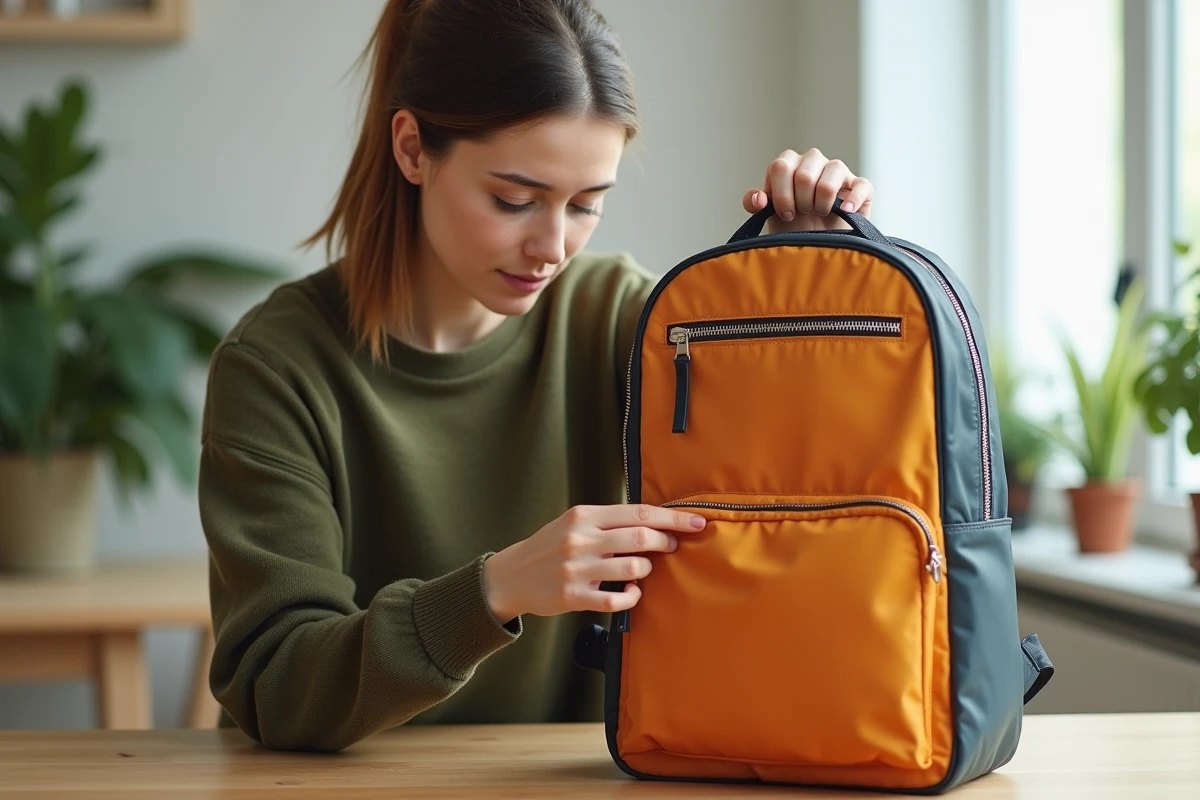
Cabaïa bag counterfeits were a marginal phenomenon until recently. Since the end of 2024, support groups on resale platforms have reported an influx of copies, including recent models and not just older collections. The success of the French brand, particularly for its urban backpacks with interchangeable pockets, is now attracting counterfeiters on a new scale. Spotting a fake Cabaïa bag requires knowledge of specific technical points, often absent from general guides.
Woven patches and interior labels: the most reliable clues for a fake Cabaïa
The Cabaïa collections for 2024-2025 use multi-layer woven patches with particularly dense weaving. On a counterfeit, this patch has a looser mesh, sometimes visible to the naked eye when the bag is tilted under low light. The embroidered logo loses sharpness: the letters may appear slightly blurred or irregular at the edges.
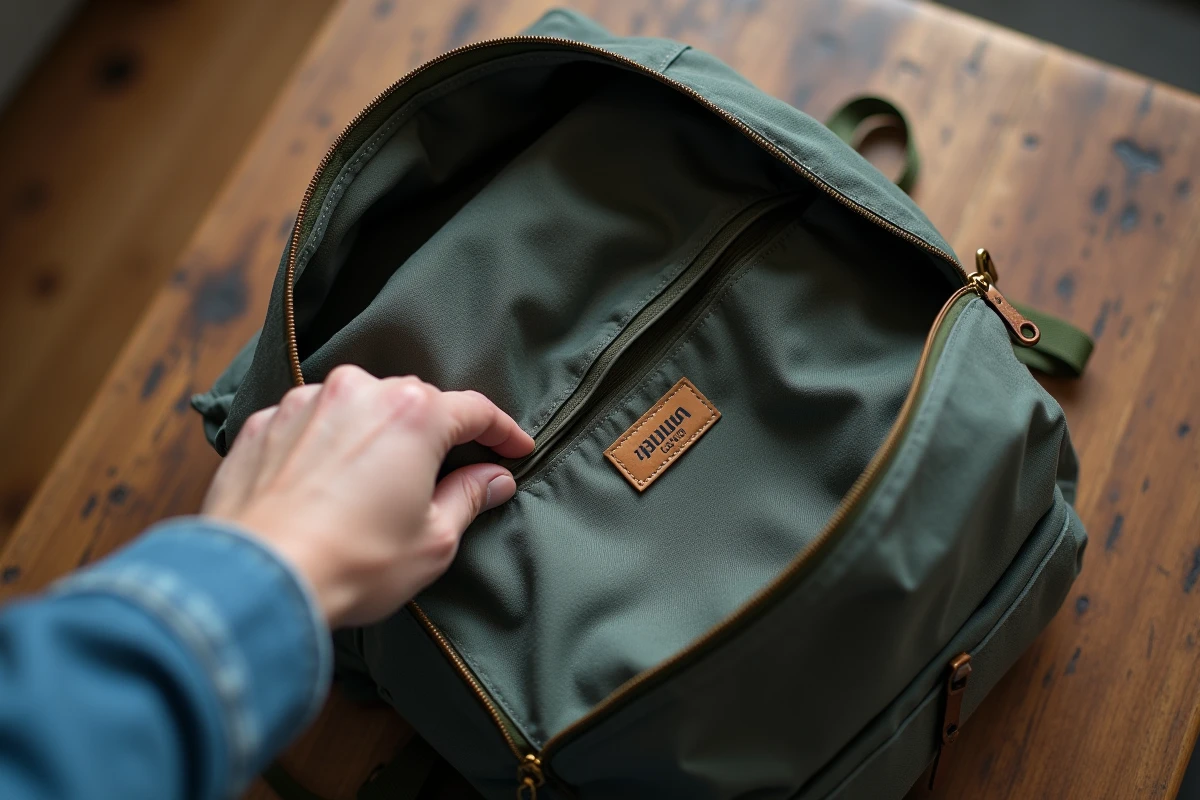
The interior label is another point of control. Recent authentic bags feature fine printing of REACH compliance mentions and recycling pictograms. On copies circulating since 2024, these mentions are often coarse, incomplete, or simply absent. A misaligned QR code or a recycling pictogram offset from the text almost systematically betrays a counterfeit.
Several elements help identify the signs of a fake Cabaia bag on Maison de Mode, notably these differences in finishing on the labels that escape rushed buyers.
Stitching and materials: what a close examination of the Cabaïa bag reveals
The finishing of the stitching is a marker that is difficult for counterfeiters to reproduce. On an authentic Cabaïa bag, the topstitching follows a regular line without tension variation. Threads never protrude at the junctions, and the reinforcement stitching at the straps presents a tight cross pattern.
On copies, the thread tension varies from one segment to another. The stitches are sometimes tight, sometimes spaced, creating a wavy effect visible along the zippers. This defect mainly appears in the junction areas between the body of the bag and the side pockets.
The texture of the outer fabric
Cabaïa uses materials containing certified GRS recycled plastic for most of its bags. The resulting fabric has a specific feel, slightly grainy but supple. Counterfeits use standard polyester with a smoother and shinier surface. With use, the fabric of a copy tends to fade more quickly at the creases.
The zippers and hardware
The zipper sliders on an authentic bag often bear discreet markings. A slider without inscription or with blurred lettering should raise a red flag. The hardware (buckles, carabiners) of a genuine Cabaïa has a noticeable weight in hand, whereas copies use lighter metal that sounds hollow when tapped.
- Check the smoothness of the zipper: on an authentic one, the slider glides without jerks or blockage, even after several months of use.
- Weigh the strap adjustment buckle in your hand: a light weight and a dull appearance often indicate a low-quality alloy.
- Observe the engraved logo on the metal elements: on a fake, the engraving lacks depth or has burrs.
Purchase channel and price: warning signals even before opening the package
The purchase context remains the first filter. A price significantly lower than that on the official website is a strong signal, especially for a recent model advertised as new. Counterfeits mainly circulate on peer-to-peer resale platforms and on third-party sites not endorsed by Cabaïa.
On Vinted support groups, moderators recommend always asking for close-up photos of the interior label and patch before any purchase. A seller who refuses these pictures or only provides generic images taken from the official site deserves suspicion.
The trap of “old collections” on sale
Some sellers present their copies as end-of-line or past season models to justify a low price. Field reports vary on this point: authentic bags from old collections do indeed sell for less, complicating the distinction. However, a model released less than a year ago sold at half price without justification (visible defect, label removed) should prompt careful examination.
Verification of the Cabaïa bag after receipt: the three-step method
If the bag is already in your hands, a methodical inspection takes less than two minutes and is enough to clear most doubts.
- First, examine the interior label: REACH mentions, recycling pictogram, QR code. Any absence or visible misalignment signals a copy.
- Next, check the stitching along the zippers and the junctions of the straps: look for irregular tension and short threads sticking out.
- Finally, check the metal elements: weight, engraving, smoothness of the slider. Compare with high-resolution visuals available on the brand’s official site if possible.
This sequence does not guarantee an absolute diagnosis on the most carefully made copies, but it allows you to rule out the vast majority of counterfeits currently in circulation. The most common fakes accumulate at least two of these defects, making identification quite quick for a trained eye.
Counterfeiters improve their copies over the months, and the control points evolve with each new Cabaïa collection. Keeping an eye on shared experiences in buyer communities remains the best way to update your verification reflexes.