
The oral exam for the CPE competition is not about reciting an educational sciences course. Since the reform integrated into the 2022 session, the admission tests evaluate the ability to analyze concrete professional situations, adopt a clear educational stance, and work in a multidisciplinary team. We have gathered ten practical tips to approach these tests methodically, minimizing stress as much as possible.
1. Time your practice sessions on real school life cases

Many candidates revise notes without ever facing the constraint of time. It is recommended to systematically practice under time constraints on concrete cases: a conflict between students in the courtyard, a suspicion of bullying reported by a teacher, a parent’s refusal of educational support.
The format of the exam leaves little room for hesitation. Reproducing real conditions (short preparation, timed presentation) allows you to calibrate your speaking rate and identify moments when you waste time on digressions. Knowing how to succeed in the CPE oral exam starts with this discipline of timed repetition.
2. Anchor each response in the CPE competency framework

The jury expects each candidate’s proposal to be linked to an identifiable competency. When analyzing a situation of school dropout, you do not just describe actions: you name the competency mobilized (individual follow-up, connection with families, coordination with the educational team).
This reflex shows the jury that you are not reasoning like an amateur. Citing the competency before developing the action structures your argument and avoids going off-topic.
3. Prepare three typical professional situations on post-Covid issues
Recent jury reports emphasize themes that emerged or intensified after the health crisis: dropout prevention, students’ mental health, regulation of digital use, and cyberbullying. These topics are considered markers of professionalism during the oral exam.
Having prepared at least three typical situations on these themes (a student dropping out after a lockdown, a case of cyberbullying via social media, a crisis management related to mobile phones in class) provides a clear advantage. They can be adapted to almost any question from the jury.
4. Film your presentation to correct the paraverbal

Watching yourself speak remains the most effective way to spot tics: avoiding eye contact, fidgeting hands, speaking too quickly. Recording at least five complete simulations before the big day allows you to correct these habits without thinking about them when the time comes.
Emphasis is placed on a calm voice and articulation. The jury listens for hours: a candidate who speaks calmly, with marked pauses between each idea, stands out mechanically from those who rush under pressure.
5. Structure the presentation in three visible parts for the jury
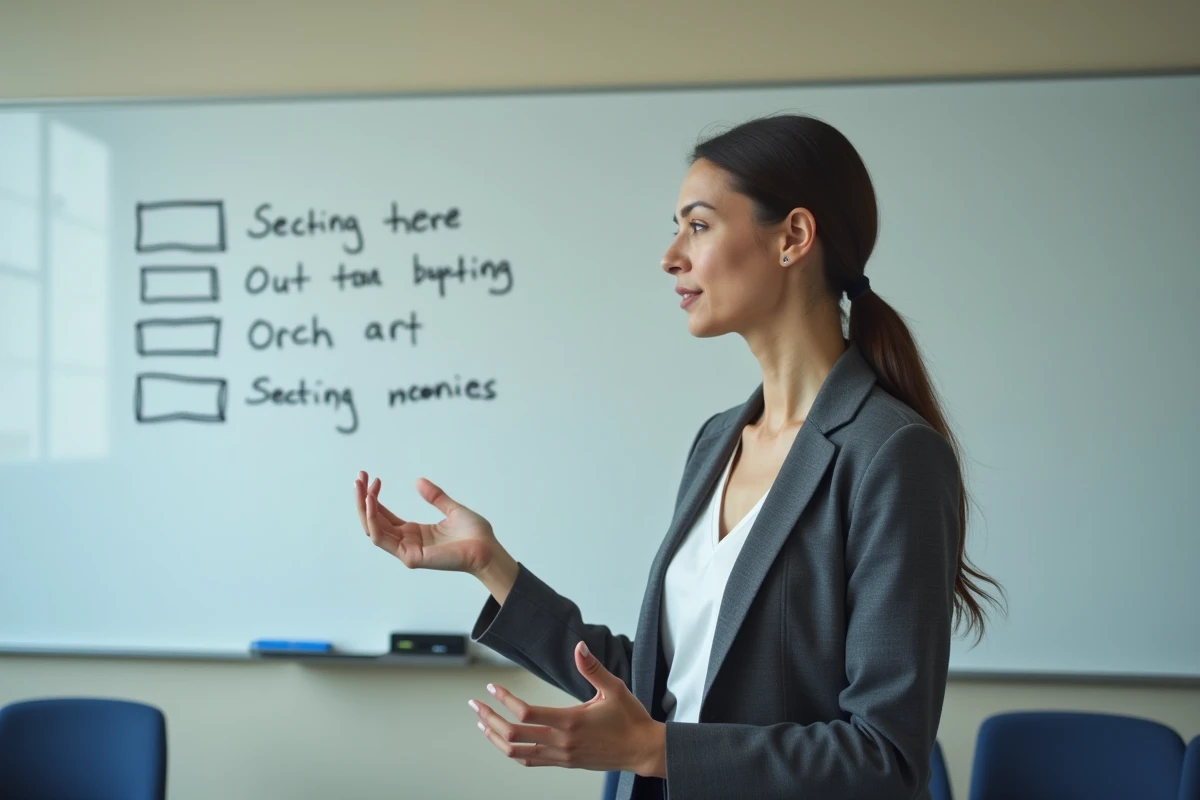
An oral presentation gains clarity when the jury immediately perceives the outline. A structure in three parts announced from the first sentence is recommended: diagnosis of the situation, proposed actions, anticipated evaluation.
Using simple logical connectors (“firstly”, “secondly”, “finally”) is not original, but it works. The jury is not looking for formal creativity; they seek an ordered reasoning and readable thought.
6. Anticipate tricky questions about institutional positioning

The jury regularly tests the candidate’s positioning in the face of dilemmas: a teacher refuses to collaborate, a principal imposes a decision contrary to your analysis, a parent contests a sanction. The right approach is not to please everyone.
The future CPE is expected to clearly position themselves within the institutional hierarchy while defending the student’s interest. Preparing three or four scenarios of this type, with a reasoned response, avoids stumbling on the big day.
7. Write a summary sheet on the regulatory framework for school bullying

Recent regulatory developments on school bullying and mobile phones are recurring topics in the oral exam. Rather than memorizing entire texts, prepare a double-sided sheet with current provisions, the responsibilities of the institution, and the specific role of the CPE in the reporting chain.
Mastering the regulatory framework on bullying shows the jury that you have integrated current ministerial priorities. Feedback varies on the expected level of detail, but knowing the main points remains a minimum.
8. Simulate the oral exam in front of a non-specialist

Practicing alone has its limits. Doing the exercise in front of someone who knows nothing about the CPE profession forces you to simplify, clarify, and rephrase. If this person understands your reasoning, the jury will too.
Asking this person to pose destabilizing questions (even absurd ones) trains the ability to rephrase a question before answering it, which is a recommended technique to buy time and show that you understand what the jury expects.
9. Pay attention to the first five minutes with a coherent professional background

The interview often starts with a presentation of the background. This is not an oral CV: select two or three experiences that show a logical progression towards the CPE profession. Each cited experience should answer the jury’s implicit question: why does this person want to become a CPE?
An internship in school life, an associative commitment with adolescents, a career change motivated by field observations: choose what creates a connection, not what makes a list.
10. Manage stress through active breathing on the day of the exam
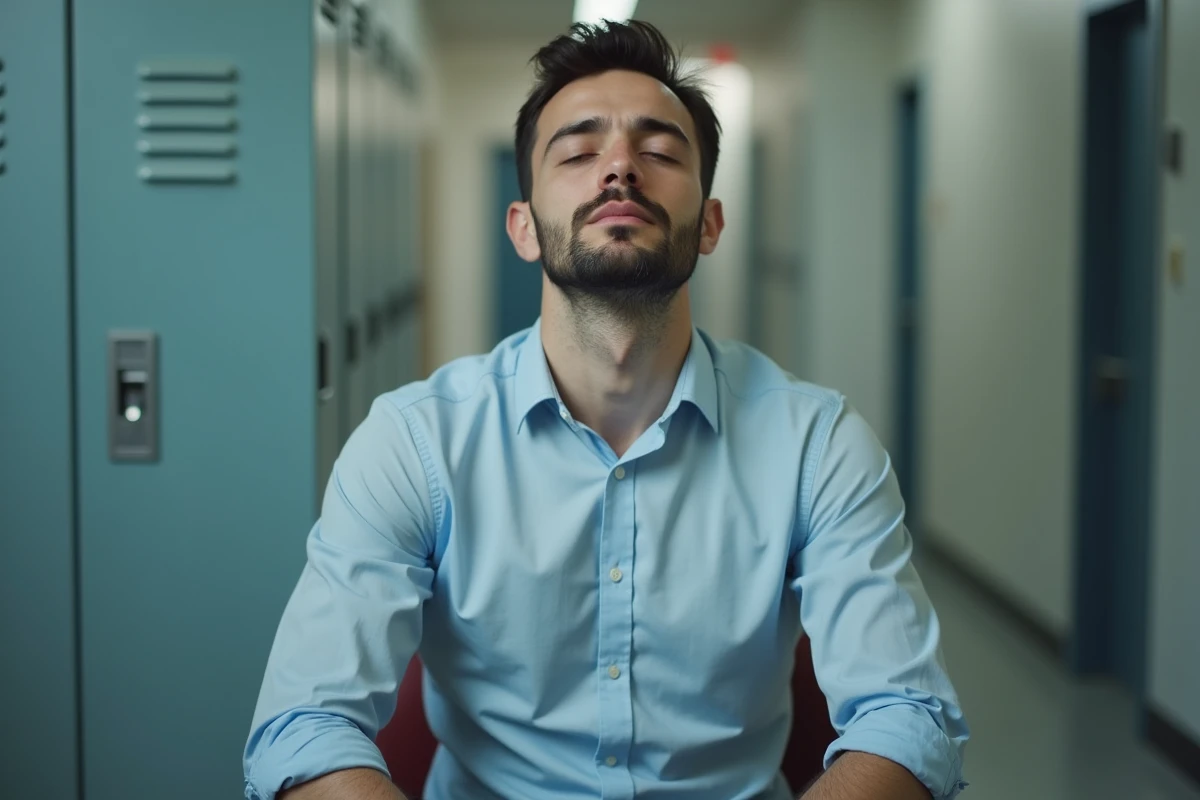
On the morning of the oral exam, the simplest technique remains controlled breathing. A few minutes of cardiac coherence (long inhalation, longer exhalation) are enough to lower the heart rate and stabilize the voice.
Avoid screens the night before, arrive with plenty of time to spare, and review your summary sheets without trying to learn anything new. The big day is for presenting, not for revising. All the preparation happens in the weeks leading up to it, not in the last hours.
Succeeding in the CPE oral exam relies on methodical preparation that articulates institutional knowledge, analysis of concrete situations, and self-control. The jury is not looking for theoretical perfection: they evaluate a professional stance, the ability to reason under pressure, and a realistic understanding of the profession.