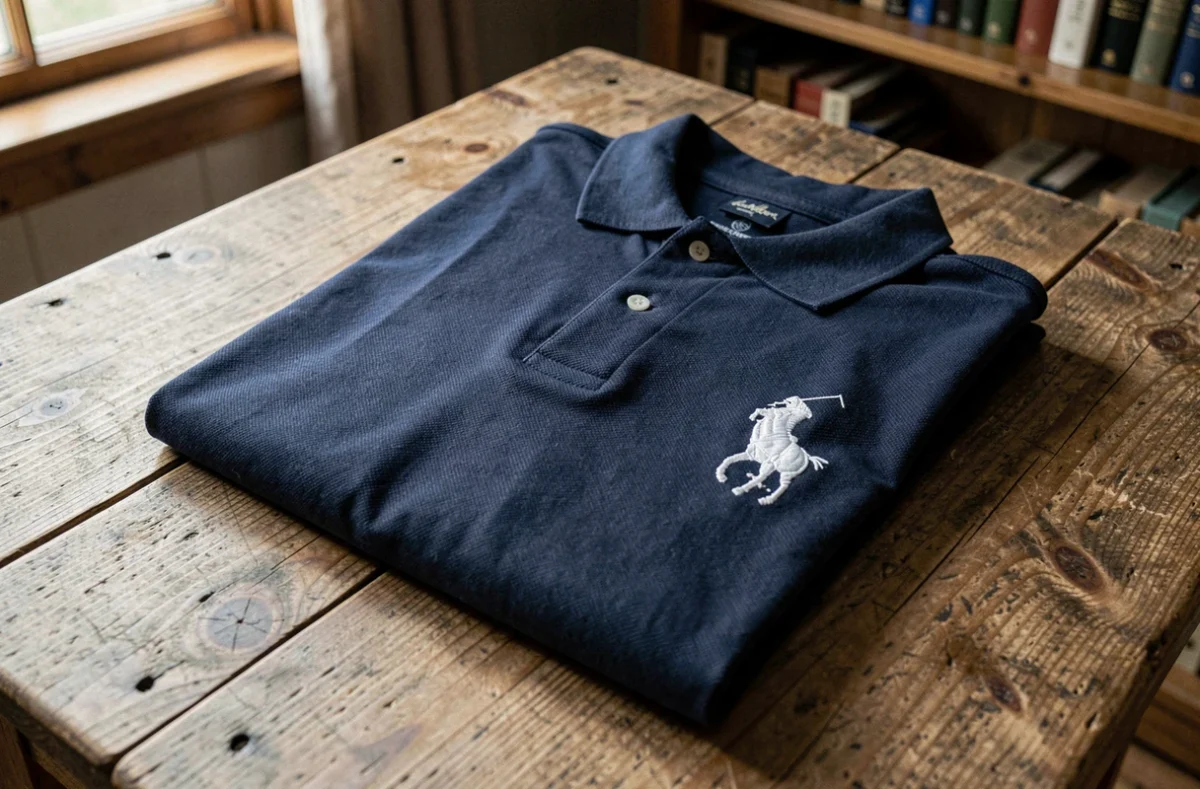
On some Ralph Lauren polo shirts, a large number 3 appears on the sleeve or across the back. It catches the eye, even among people who have never watched a polo match in their lives. Far from being a purely graphic choice, the number refers to a specific position in the equestrian sport that gave the brand its name.
Position number 3 in polo: a leading role on the field
Before talking about fashion, it helps to understand what happens on a polo field. Each team has four players, numbered 1 to 4. Each number corresponds to a distinct tactical role.
The player wearing number 3 takes on the most well-rounded offensive and defensive position. They direct play, launch attacks and cover weaknesses. In polo tradition, this is usually the team’s most experienced rider, often the captain.
That’s why Ralph Lauren didn’t choose 7 or 10. The number 3 isn’t arbitrary; it conveys the idea of leadership on the field. By embroidering it on a garment, the brand borrows a specific sporting code and brings it into the world of fashion. An article dedicated to the meaning of the Ralph Lauren polo shirt with number 3 explores this connection between sport and clothing.
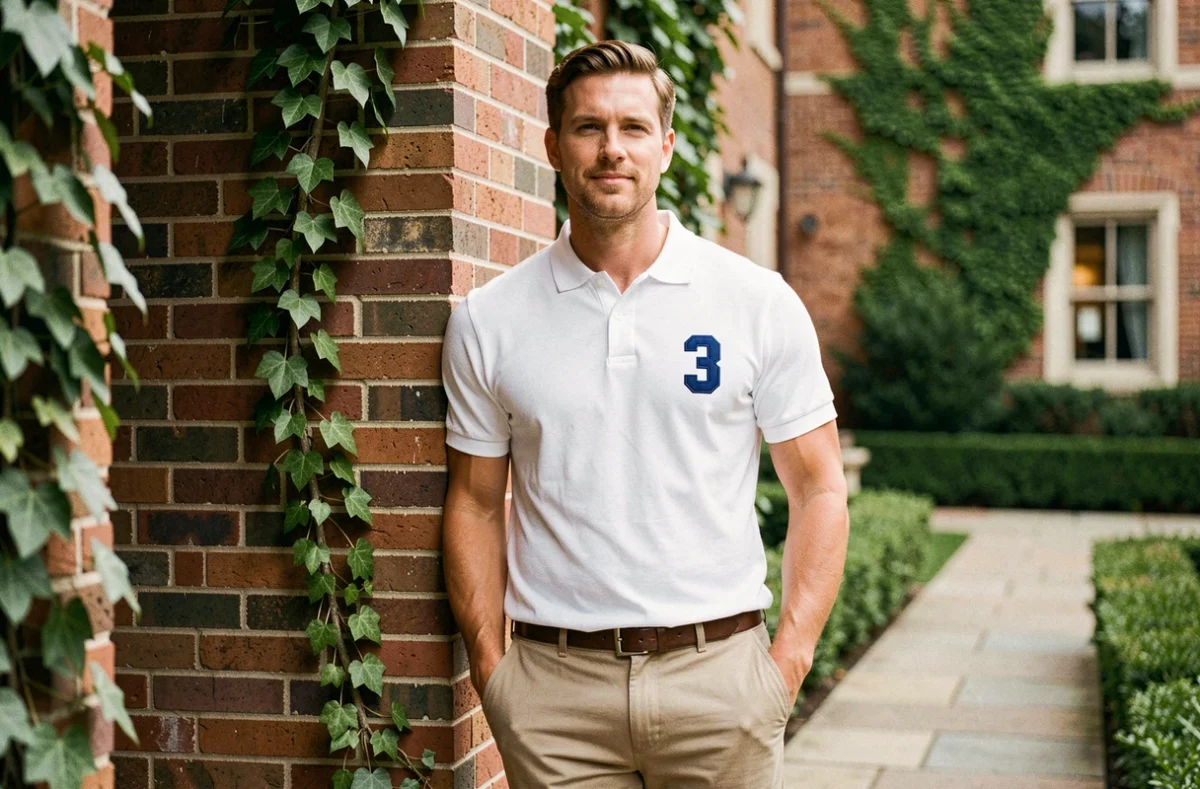
Ralph Lauren polo shirts and the number 3: a sporting code turned fashion statement
Have you noticed how oversized the number 3 on these polo shirts often is? Placed on the right sleeve or embroidered large across the back, it serves as an instantly recognizable graphic element. The embroidered polo player on the chest remains the main Polo Ralph Lauren logo, but the number 3 adds another layer of visual meaning.
This treatment is no accident. The brand creates the look of a sports jersey on an everyday garment. The classic polo shirt, launched in 1972 according to Ralph Lauren’s official timeline, is a menswear staple. Adding a number transforms it into a statement piece with a strong identity.
From the field to the sidewalk
The number 3 polo shirt isn’t designed for playing polo. No one gallops around in a piqué-knit collar with an embroidered polo player on their chest. The garment borrows the codes of sport (numbers, crests, bright colors) to suggest a lifestyle rather than an athletic pursuit.
It’s a formula Ralph Lauren has mastered from the start. As early as 1967, choosing the name “Polo” for a tie collection was never a functional decision. It evoked a whole world: private clubs, horses and manicured lawns. The number 3 extends that idea, adding a touch of sporting authenticity to a product designed for the city.
Sporty look or genuine heritage: what the number 3 says
It’s worth asking the question directly. Does the number 3 still refer to polo, or is it mainly there to give a fashion garment a sense of status?
The answer lies somewhere in between. The connection to position number 3 in polo is real and documented. But most buyers don’t know its origins. What they see is a number that gives a plain polo shirt character and sets it apart from an unbranded basic.
How the number changes the way the garment is perceived
A Ralph Lauren polo shirt without a number is a classic, understated, versatile piece. The same style with a large embroidered 3 becomes recognizable from several yards away. The number acts as a visual signal that says two things at once:
- It links the garment to the equestrian world and the sport of polo, giving it a sense of historical legitimacy
- It turns a basic into a collector’s piece, with a “jersey effect” that draws attention without veering into technical sportswear
- It strengthens brand recognition, since the number 3 has become as recognizable as the embroidered polo player on some collections
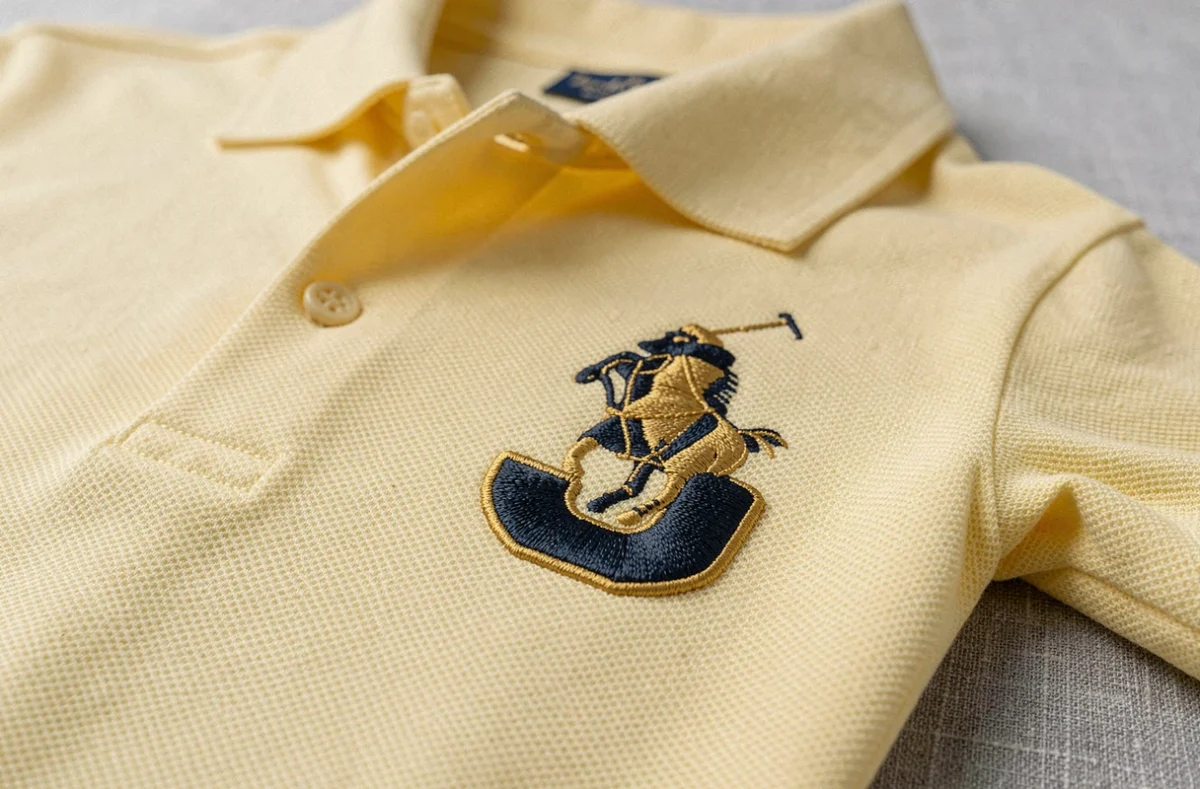
Ralph Lauren and the creation of a brand world through detail
The number 3 doesn’t work in isolation. It’s part of a system of symbols that Ralph Lauren has carefully built since the late 1960s. The brand has never sold just clothes. It sells a story.
The wide ties of the early days evoked Hollywood glamour. The opening of a dedicated store at Bloomingdale’s in 1970 set a new standard for luxury retail presentation. The knit polo shirt, launched soon after, distilled that entire world into a single garment. The number 3 adds a sporting chapter to this story, visually grounding the garment in the tradition of polo.
Why this detail has endured for decades
Fashion trends change quickly. An overly prominent logo can date a garment within a few seasons. The number 3 endures because it is rooted in a stable reference: the rules and numbering of polo have not changed.
This consistency gives the number a longevity that other graphic elements lack. It doesn’t need to be redesigned or updated. Its meaning stays the same, whether the polo shirt is worn in 1990 or today.
- The number isn’t tied to a seasonal trend; it draws on a timeless sporting code
- Its visible placement (sleeve, back) makes it a recognizable marker of identity without being ostentatious
- It works across a range of colors and cuts, from slim fit to relaxed fit
The number 3 on a Ralph Lauren polo shirt tells a story in a single digit: that of a playmaker on a polo field, reimagined on a city garment. Whether or not the buyer knows its origins, the result is the same. The number gives the polo shirt a personality that the logo alone can’t create.