
The solidarity travel is based on a simple principle: an identifiable portion of the price of the stay directly finances a project defined by the host communities. This mechanism distinguishes it from classic tourism labeled “responsible,” where redistribution often remains vague.
Traceability of funds: the criterion that brochures do not detail enough
Most agencies display a solidarity commitment. Few explain how money circulates between the traveler and the local project. Financial traceability is, however, the foundation of credibility for any solidarity approach.
A reliable operator specifies the exact percentage of the price that is returned, the name of the beneficiary project, and the local governance mode that decides on the allocation of funds. Without these three elements, the word “solidarity” remains a commercial claim.
In France, the DGCCRF has reminded that the use of terms like “solidarity,” “fair,” or “responsible” must be justified by objective criteria: traceability of funds, evidence of impact, regulated commercial relationships with local partners. Offenders face sanctions for misleading commercial practices. Those who wish to travel with Le Voyageur Solidaire will find this type of transparency right from the descriptive sheet of each stay.

Solidarity travel and voluntourism: a regulatory boundary that is hardening
Confusing solidarity travel with short-term humanitarian missions remains common. Voluntourism, where a traveler spends a few days “volunteering” in a school or orphanage, is under increasing scrutiny from European authorities.
The problem is structural: a one-week stay in a school rarely brings a skill that the community does not already possess. In some documented cases, the constant rotation of volunteers destabilizes the children more than it helps them.
What the European framework changes
The European regulation on environmental claims (Green Claims Regulation), voted in April 2024 by the European Parliament, will require tourism stakeholders to prove their ecological claims. Mentions of “carbon offset” or “zero-emission travel” must be substantiated under the control of national authorities.
A well-designed solidarity stay does not rely on the unpaid work of the traveler, but on an economic circuit that compensates local providers (guides, hosts, artisans) at a fairly negotiated rate.
Responsible tourism labels: which ones to check before booking
Several certifications allow for sorting the offers. Not all have the same scope or the same audit requirements.
- The ATR (Act for Responsible Tourism) label certifies French agencies based on a framework verified by an independent organization, covering environmental impact and relationships with local partners.
- The B Corp certification, adopted by an increasing number of travel operators since 2022, evaluates the entire social and environmental governance of the company, not just the tourism product.
- The Fairtrade Tourism label, more widespread in Southern Africa, guarantees that host communities participate in decisions and receive fair compensation.
A label is not an absolute guarantee, but its absence should prompt specific questions about revenue redistribution and the duration of local partnerships.
Immersion and local impact: what distinguishes a solidarity stay from a classic circuit
The format of the stay changes the nature of the exchange. A solidarity trip favors small groups, accommodations managed by families or cooperatives, and activities co-constructed with the locals.
Three concrete markers of a well-structured stay
- Accommodation with locals or in community structures, where the majority of the income stays in the village instead of going to a distant tour operator.
- A program that includes unstructured free time, allowing for spontaneous exchanges rather than a succession of timed visits.
- A shared impact report after the trip, even if brief: number of local nights, amount returned to the project, feedback from partners on the stay’s progress.
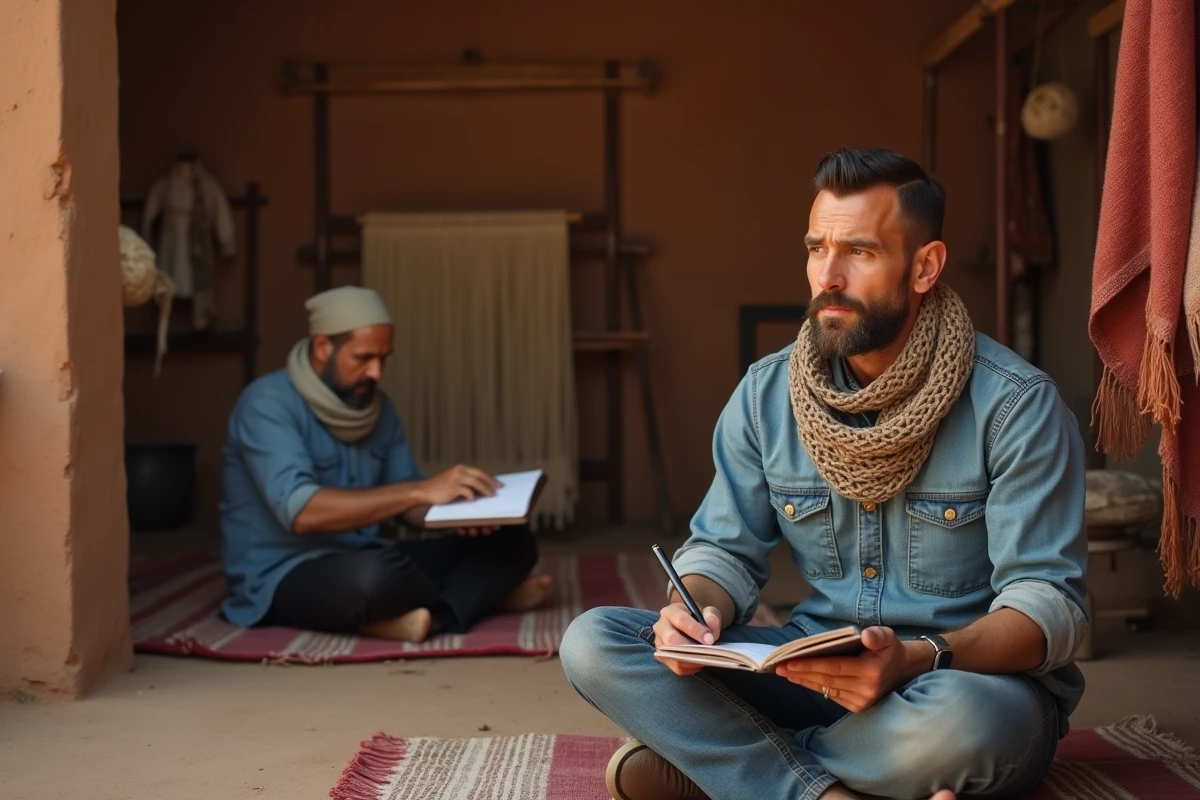
The most common destinations for this type of stay are located in West Africa, Southeast Asia (Vietnam, Cambodia), and Latin America. The choice of country matters less than the quality of the partnership established on-site. A project supported by a local association active for several years offers a more solid framework than a recent setup managed from abroad.
Solidarity travel does not require any specific skills or physical condition. What makes it demanding is the acceptance of a different pace, dictated by the daily lives of the visited communities rather than by an optimized tourist program. It is also this slowness that produces the most memorable encounters.