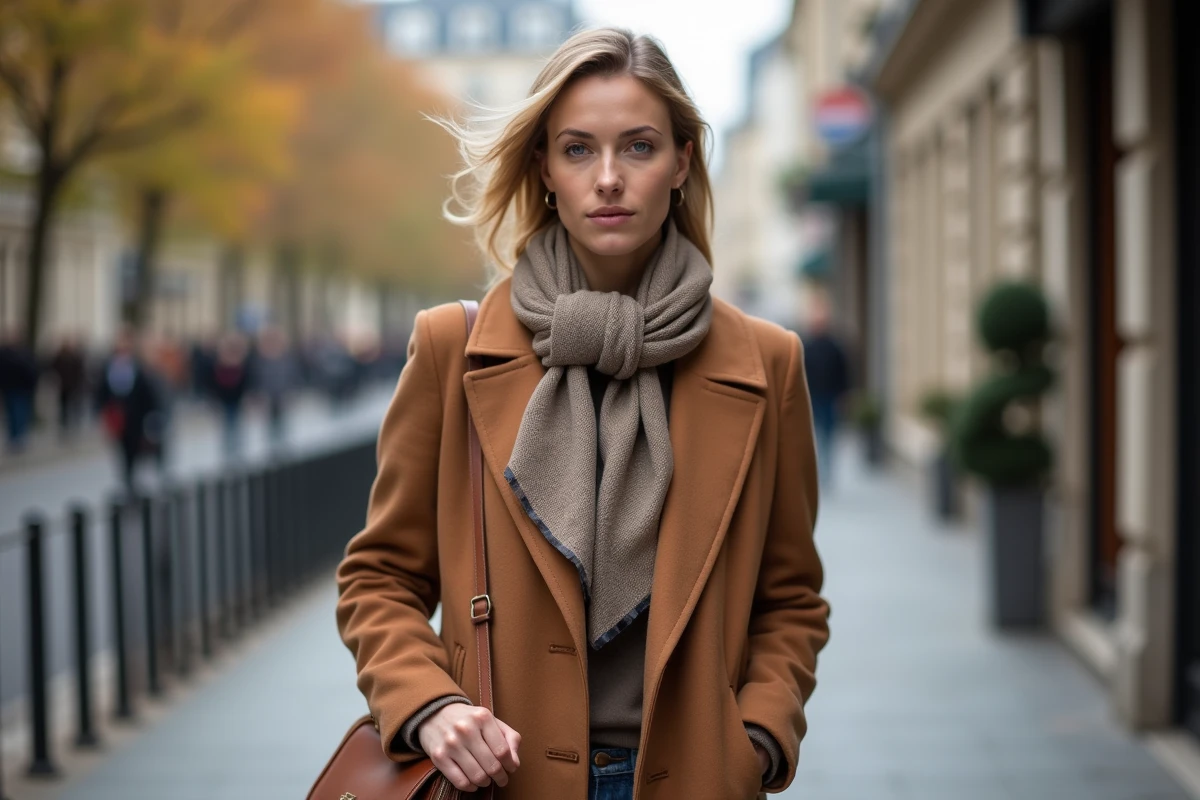
We all have this reflex in the morning: the outfit is ready, but something is missing. A bare collar, an empty wrist, a bag that clashes with the rest. It’s fashion accessories that solve this problem in a few seconds, without going back to the dressing room. However, it’s essential to focus on the right ones, those that work with multiple outfits and last over time.
Modular accessories: fewer pieces, more combinations
Before discussing jewelry or bags, it’s beneficial to rethink the very logic of accessories. A square silk scarf tied as a headband, worn as a belt over jeans, or slipped onto a bag handle replaces three different pieces. This principle of modularity changes the game on a daily basis.
Several eco-responsible brands are now developing modular accessories designed to multiply looks with fewer items. You can find bags with interchangeable handles, reversible belts with smooth leather on one side and suede on the other, or even transformable jewelry (a short necklace that doubles as a bracelet). According to the Ellen MacArthur Foundation, this type of product serves as a lever to reduce overconsumption in fashion.
In practice, you can start with a core of five to seven versatile accessories to cover most situations, from the office to the weekend. The selection criterion is simple: if a piece only works with one outfit, it clutters more than it enhances. A wide selection of accessories in this sense can be found on modeforyou.fr, which categorizes items by use rather than by category.

Sunglasses and belt: two pieces that structure an outfit
We often underestimate how much a pair of sunglasses defines a style even before the rest of the accessories. Thick acetate frames for a bold look, thin metal arms for a more discreet appearance: the choice of shape alters the perception of the face and, by extension, the entire silhouette.
The practical constraint is morphology. A cat-eye frame elongates a round face, while an aviator model softens angular features. Trying several shapes in-store remains the most reliable method, as feedback varies greatly depending on skin tones and hairstyles.
The belt as a tool for proportion
The belt is not just for holding up pants. On a flowy dress, it creates a waistline that restructures the silhouette. On an oversized blazer, it transforms a “borrowed” effect into a deliberate choice.
- Thin smooth leather belt (less than two centimeters wide): versatile, can be worn over a dress, high-waisted pants, or over a light cardigan
- Woven belt: adds texture without rigidity, works well in casual outfits as well as with chinos
- Statement buckle model (gold, geometric): enough to transform a basic look into a stylish outfit, but requires the rest to be understated
It’s recommended to have at least two belts of different widths. One fits through the loops, while the other is worn as a visible accessory.
Discreet jewelry and connected accessories: style that does more
On the jewelry front, the underlying trend pushes towards controlled accumulation rather than a single imposing piece. Chains of different lengths are layered, gold and silver are mixed (a taboo that has fallen for several seasons), and thin rings are stacked on multiple fingers.
The key point remains the consistency of finishes. Mixing metals works if one metal is dominant, for example, two-thirds gold and one-third silver. Beyond that, the effect becomes confusing.
Connected rings and bracelets worn like real jewelry
A segment still little covered in fashion: connected accessories designed as style objects. Brands like Oura or Circular offer activity-tracking rings whose design approaches that of a contemporary wedding band. Ring Pay (KBC) markets a contactless payment ring, worn daily like a classic piece of jewelry.
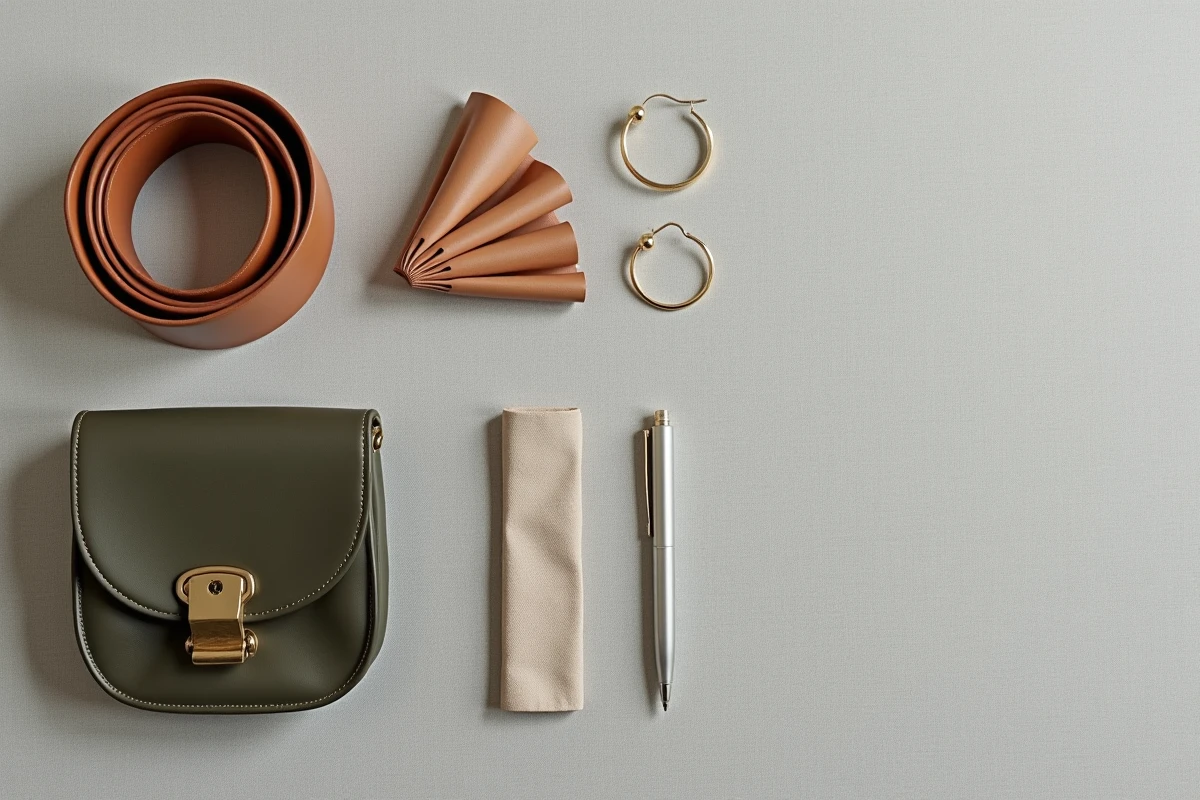
These items work because they are discreet. No one notices that an Oura ring measures sleep quality. It’s the opposite of a flashy fitness bracelet: here, the technology disappears behind the fashion accessory.
Bag and shoes: the coherence that anchors the look
We have long been told that the bag should match the shoes. This strict rule has lived its time, but the underlying principle remains valid: bags and shoes share the same register (casual, structured, sporty) to avoid visual dissonance.
A grainy leather crossbody bag with white sneakers works. The same bag with patent heels creates an unfortunate mismatch. The idea is not to match colors but to align textures and levels of formality.
- Casual outfit (jeans, t-shirt, sneakers): soft bag, canvas tote, or messenger bag
- Office outfit (straight pants, shirt, loafers): structured bag, rigid clutch, or compact briefcase
- Event outfit (dress, heels): minaudière, clutch, or small chain bag
The bag remains the piece where investment is most justified. A well-maintained full-grain leather model accompanies a woman or man for several years, whereas a synthetic bag shows signs of wear in just a few months.
Enhancing your style daily does not require multiplying purchases. A few carefully chosen pieces that work together and adapt to various contexts do more than a drawer full of accessories worn only once. The real luxury is not hesitating in front of your mirror in the morning.