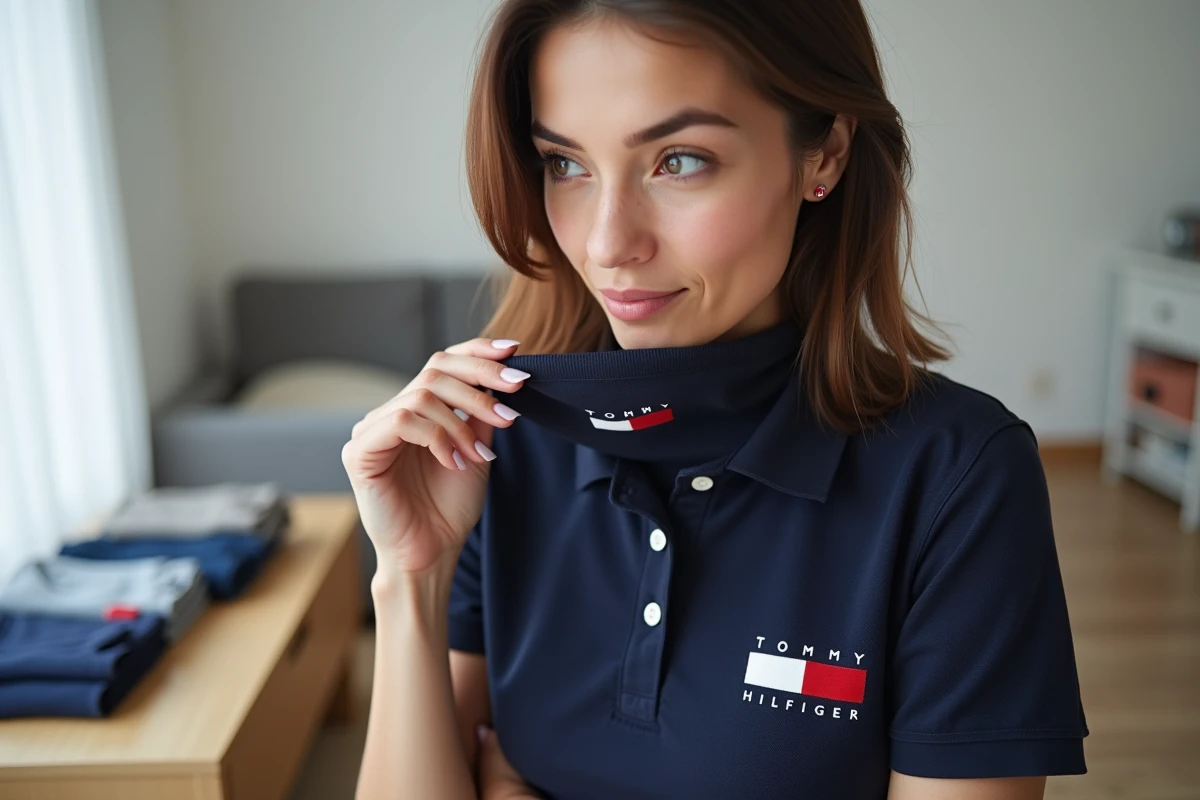
You come across a Tommy Hilfiger jacket at a bargain price on a marketplace, the photos seem correct, and the logo is there. The classic reflex is to zoom in on the embroidered flag and compare the colors. It’s a good start, but recent counterfeits replicate visual elements very well. The real difference lies elsewhere: in the consistency of the sales channel, the traceability of the product, and a few manufacturing details that counterfeiters still overlook.
Authorized sales channel: the first anti-counterfeit filter for Tommy Hilfiger
Before even returning a garment to inspect its seams, you save time by checking where it comes from. Tommy Hilfiger publishes an official “Brand Protection” page that lists authorized distribution channels and allows you to report suspicious sellers.
The most convincing counterfeits circulate on third-party marketplaces or through unlisted resellers. A seller offering Tommy Hilfiger without being among the authorized retailers (official site, partner department stores, brand-managed outlets) poses a high risk. This filter eliminates a good portion of fakes before any handling of the product.
To go further on visual clues, you can identify an authentic Tommy Hilfiger label on Geopolitis and cross-check this information with the purchase channel verification.
Seams and finishes: what counterfeits still miss
Counterfeiters invest in reproducing the logo because it’s what the buyer looks at first. Interior finishes receive less attention, and that’s where the most reliable clues can be found.

Turn the garment inside out and examine the seams
On a genuine Tommy Hilfiger, the internal seams are even, with no threads sticking out. Irregular seams or poorly cut fabric excess almost always indicate a counterfeit. Pay particular attention to the shoulder joints and the bottom hems: these are the areas where the difference in quality of workmanship is most visible.
Buttons and zippers
Buttons on an authentic garment often bear the brand name engraved or printed. On counterfeits, the buttons are generic, smooth, or misaligned. Zippers show the same type of clues: a lightweight pull tab that catches or displays no markings should raise a red flag.
A button without markings on a Tommy Hilfiger polo is a strong signal of counterfeiting.
Labels and consistency of product information
The label remains a rich area for analysis, provided you know what to look for beyond the logo.
- The typography should be sharp, with no smudges or blurry characters. Counterfeits often feature slightly different fonts from those used by the brand, with inconsistent spacing.
- Composition and care labels must be present and written in the language of the target market. A garment sold in France without a label in French poses a compliance issue, regardless of the brand.
- The style number or product reference appears on the interior labels of authentic pieces. You can search for it on the official site or online catalogs to verify that it corresponds to an existing model.
- The position of the main label (collar, side seam) varies by type of garment, but its attachment should be neat, sewn, and not glued.
The embroidered flag and logo: going beyond a quick glance
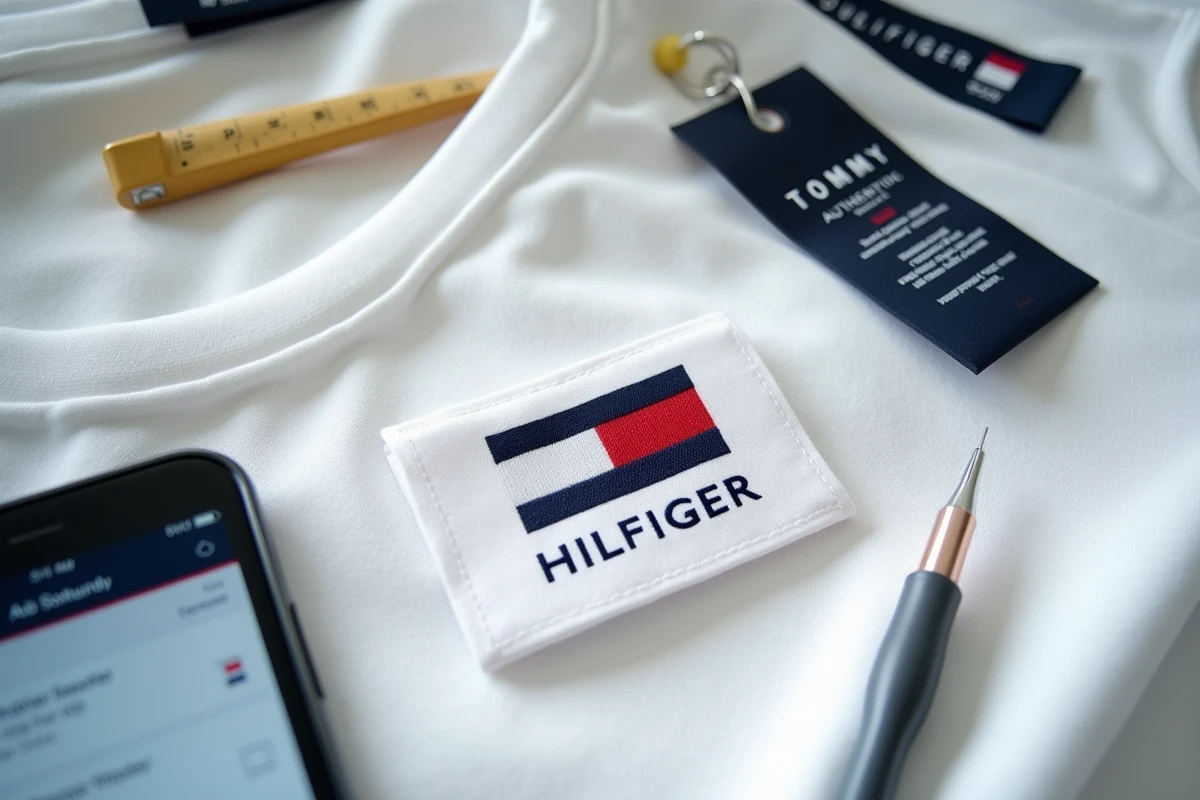
The tricolor flag (navy blue, white, red) embroidered on Tommy Hilfiger pieces is the most well-known checkpoint. Recent counterfeits replicate the colors quite faithfully, but several details still betray the fakes.
The flag’s stripes must be perfectly parallel and of equal width. On counterfeits, the white stripe is often wider or narrower than the other two. The embroidery itself should be dense and uniform: a flag where the background fabric is visible through the threads is suspicious.
For pieces bearing the text logo “TOMMY HILFIGER,” check the spacing between the letters. Fakes often have letters that are too close together or approximate vertical alignment. This type of detail is best spotted by comparing the garment with a high-resolution photo of the same model on the official site.
Traceability and buying reflexes on marketplaces
Classic guides stop at visual inspection. In practice, when buying second-hand or online, the seller’s commercial consistency matters as much as the product’s condition.
- A price significantly lower than the usual rate, even for second-hand items, should trigger a verification. Tommy Hilfiger models retain some resale value.
- A seller offering multiple luxury or premium brands in large quantities, without a consistent sales history, increases the risk of encountering counterfeits.
- You can request a photo of the interior label with the product reference and verify it before purchasing. A seller who refuses to provide this photo is not worth the risk.
Returns vary on this point, but some resale platforms now incorporate authentication processes before shipping. Prioritizing these channels significantly reduces the risk.
The quality of Tommy Hilfiger counterfeits has improved visually in recent years. Relying solely on the logo or the flag is no longer sufficient. Cross-checking the sales channel verification, inspecting interior finishes, and checking the consistency of labels remains the most reliable method to secure a purchase.