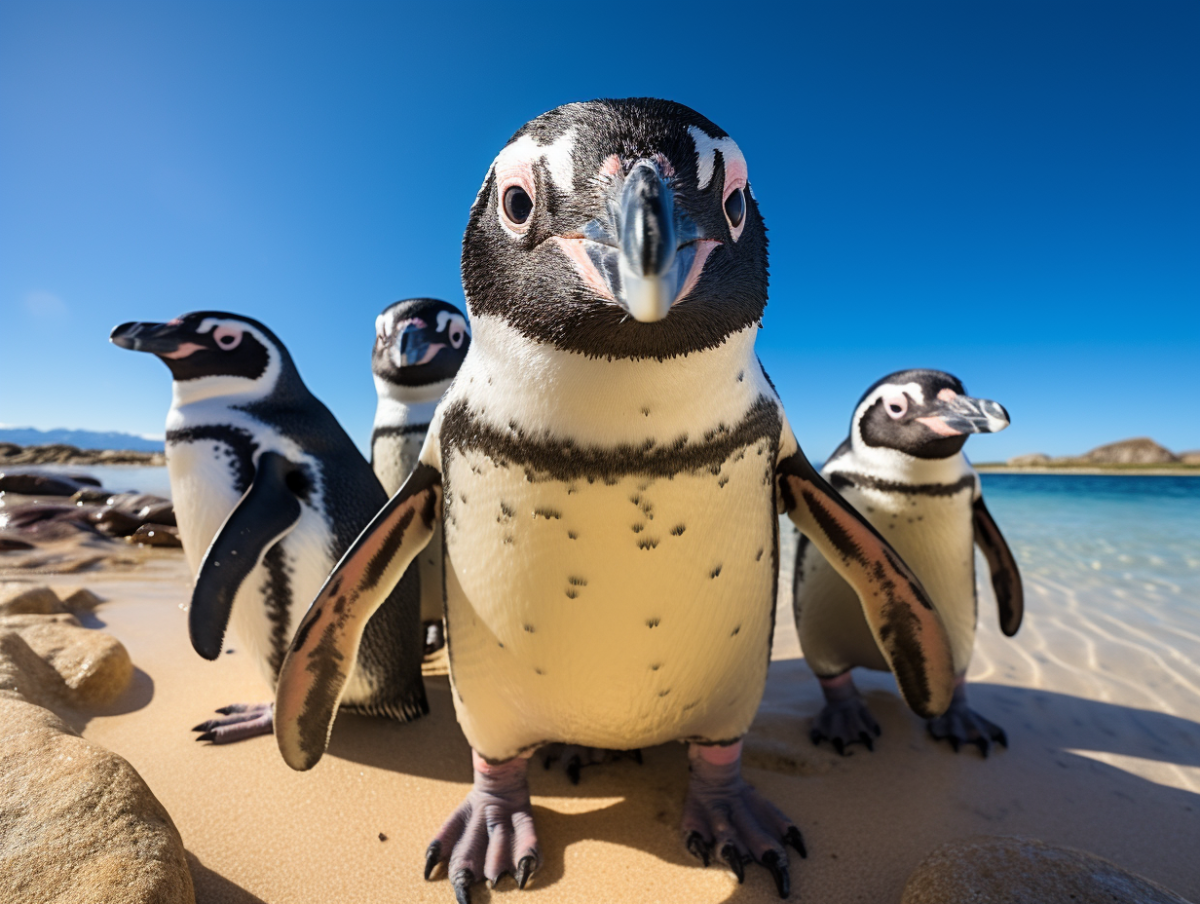
In the heart of the icy expanses of Antarctica, penguins, with their comical waddle, awaken the curiosity of scientists and nature enthusiasts. These creatures dressed in their natural tuxedos hold fascinating secrets about the complexity of their social interactions. On the wind-swept beaches, the behavior of penguins proves to be as intriguing as it is charming. The courtship rituals, the remarkable cooperation during chick-rearing, and the solidarity in the face of predators reveal a rich social life that defies the rigors of their extreme habitat.
The Complex Social Life of Penguins
In the southern lands, on King George Island, one of nature’s most fascinating ballets unfolds: the behavior of the chinstrap penguin. Under the watchful eye of researchers like Won Young Lee from the Korean Polar Research Institute, the complexity of these seabirds is revealed. The studies conducted lead us to ask: what do penguins hide beneath their apparent simplicity?
Marine biologist Won Young Lee, by scrutinizing these feathered beings, has shed light on a social life of unsuspected richness. Chinstrap penguins, whose bonds extend beyond mere survival, establish lasting relationships shaped by the need to reproduce and protect their offspring. Mutual aid, courtship, and even mourning weave the fabric of their daily lives, revealing behaviors that challenge our conception of animality.
Social interactions among these penguins are not the result of chance, but the outcome of millennia of evolution, adapted to the extreme conditions of Antarctica. Upon observation, these birds never cease to surprise: the way they communicate, organize into colonies, and even confront each other reflects remarkable collective intelligence. Polar research thus plays a fundamental role: unveiling the secrets of this social life to better understand how nature orchestrates harmony in the most hostile environments.

Survival Strategies and Unusual Behaviors
In the heart of Antarctica, chinstrap penguins develop survival strategies that captivate the scientific community. Paul-Antoine Libourel, a research engineer and sleep ecophysiologist at the Lyon Neuroscience Research Center, has conducted revealing expeditions. His research focused on an uncommon peculiarity: the micro-naps of penguins, adapted to extreme conditions where every moment of inattention can be fatal.
This practice of fragmented sleep is intriguing. Michel Gauthier-Clerc, a biologist and veterinarian at the University of Geneva, highlighted the importance of studying penguin sleep in their natural environment. He emphasizes the necessity of constant vigilance against natural predators, such as the Antarctic skua, a formidable hunter of chinstrap penguins.
The adaptation of penguins extends beyond sleep. Yvon Le Maho, emeritus research director at CNRS and affiliated with the University of Strasbourg, explained fascinating behaviors such as unihemispheric sleep. In birds and dolphins, this ability allows one part of the brain to remain awake while the other recovers, an optimal strategy for monitoring threats while resting.
Studies on the ecophysiology of sleep and the adaptive behaviors of chinstrap penguins offer new perspectives on the mechanisms of adaptation in hostile environments. These discoveries enrich not only our understanding of animal evolution but can also illuminate human medical applications. Survival in Antarctica thus becomes a fertile field of investigation for scientists eager to unravel the mysteries of nature.