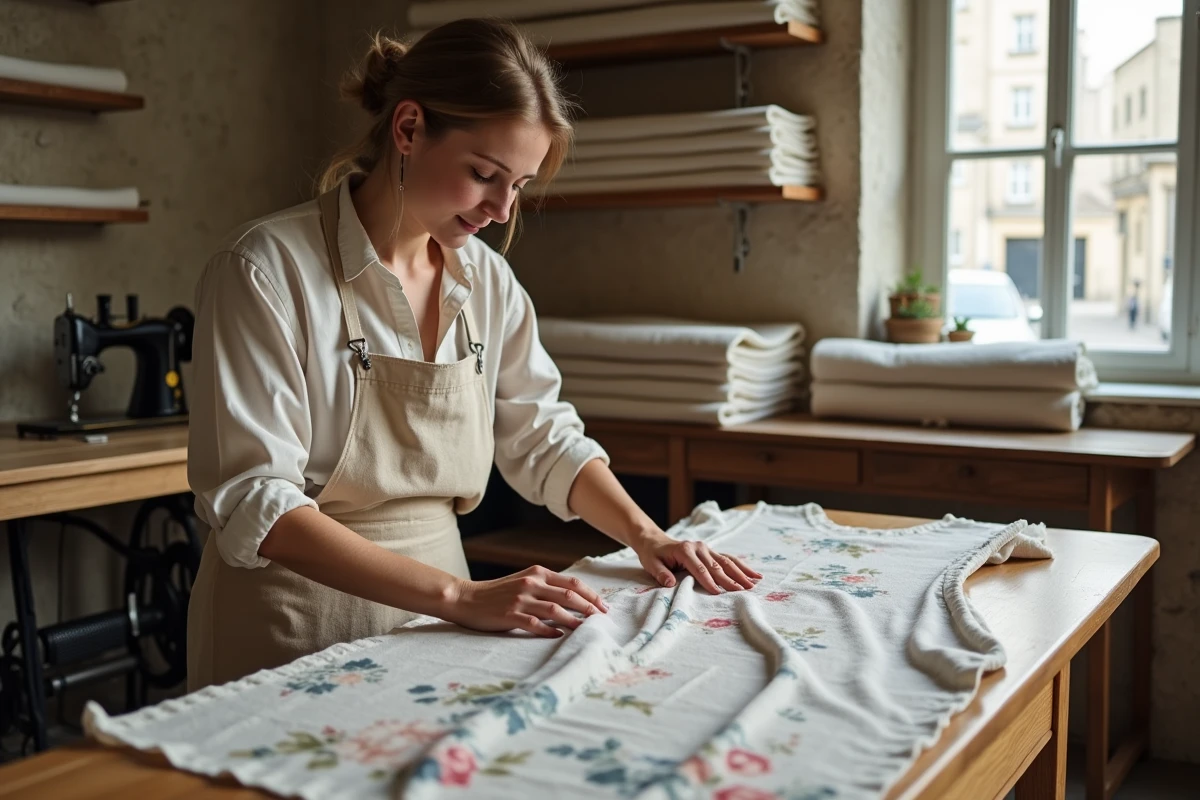
Sézane regularly communicates about its ethical and environmental commitments, but the question of the precise location of its workshops remains a topic that the brand addresses gradually. Between Portugal, Bulgaria, Madagascar, and a pilot project in Normandy, Sézane’s production chain spans several continents, with varying levels of transparency depending on the sites.
Traceability Sézane: what the European regulation changes
The entry into force of the European regulation on due diligence requires fashion brands to publish the addresses of their main workshops. For Sézane, this concerns several dozen sites, a significant portion of which are in Portugal. This transparency obligation exceeds what most competitors currently offer on their product sheets.
The brand has integrated the Accord on Fire and Building Safety protocol into its audits, covering all of its main suppliers in Portugal and Bulgaria. These independent checks focus on building safety, working conditions, and compliance with local social standards. To know precisely where Sézane’s clothes are made, one must cross-reference the information from the labels with the audit reports published by the brand.
The available data does not yet allow verification of whether all second-tier subcontractors (dyers, spinners) are covered by these audits. This is a point that European regulation should clarify in the coming years.
Workshops in Portugal and Bulgaria: the European foundation of Sézane’s production
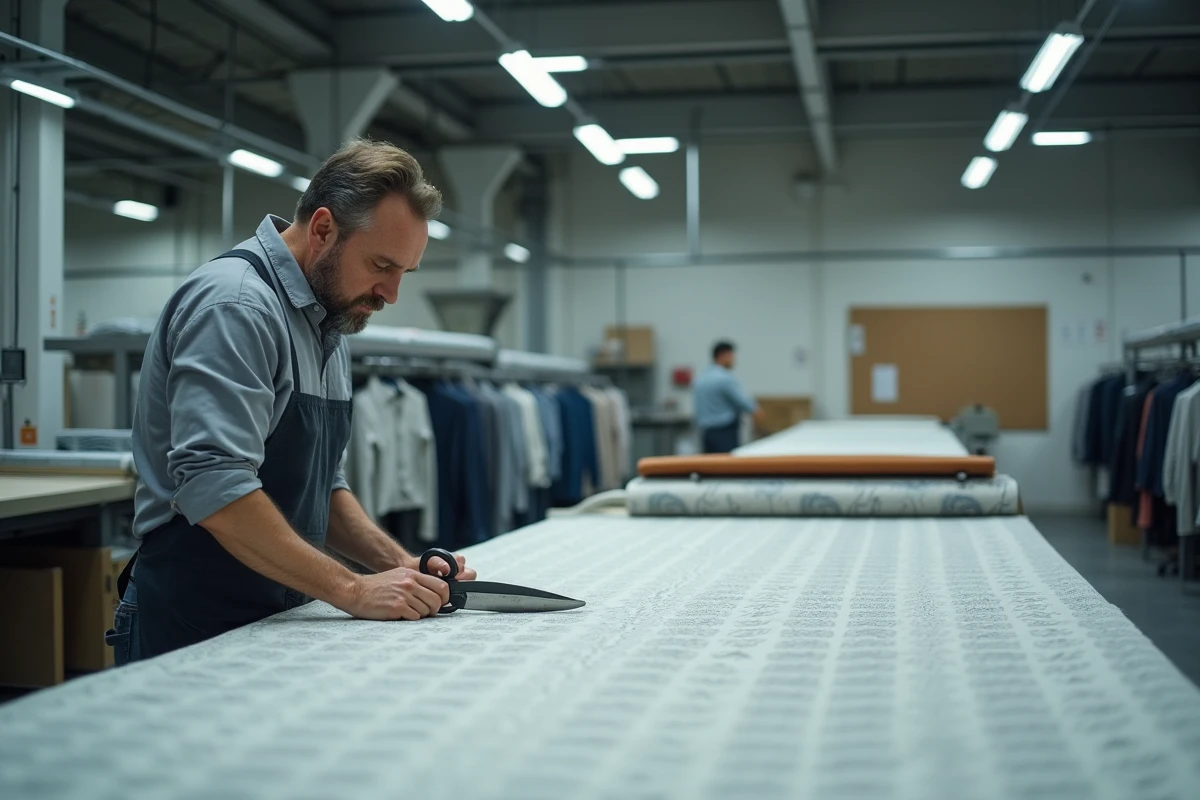
Portugal accounts for a major share of Sézane’s manufacturing, particularly for cotton ready-to-wear and knitwear pieces. Portuguese workshops benefit from recognized textile expertise in Europe, with cotton and tanning industries established for several decades.
Bulgaria mainly contributes to pieces requiring structured tailoring, such as certain jackets and coats. Both countries provide Sézane with a European regulatory framework, which facilitates audits and social controls.
The geographical proximity of these workshops to France also reduces logistical delays and the carbon footprint of transport, an argument that the brand emphasizes in its communication about responsible fashion.
Raw materials and associated labels
Sézane uses eco-responsible materials in an increasing share of its collections. Organic cotton, certified wool, and European linen are among the recurring fibers. The brand displays environmental labels on its product sheets, but the exact percentage of labeled items varies by season.
- Certified organic cotton, primarily sourced through traceable European or African supply chains
- Wool from certified supply chains, with animal welfare monitoring declared by the brand
- Linen grown in Europe, with part of the processing taking place in Portugal
- Leather from audited tanneries, with a declared effort on low-impact tanning processes
Workshops in Madagascar: working conditions and field feedback
Madagascar is one of the countries where Sézane produces certain pieces. This choice raises recurring questions about working conditions in partner workshops. NGO reports indicate a notable improvement in working conditions since 2024, particularly due to local training funded by the brand.
The reduction of excessive overtime is one of the cited indicators. Field feedback varies on this point according to observers: some NGOs praise the progress, while others believe that monitoring remains insufficient at indirect subcontracting sites.
Manufacturing in Madagascar allows Sézane to maintain accessible prices on certain ranges while displaying ethical commitments above the average of fast fashion. The compromise between production cost and social responsibility remains an open topic for the entire sector.

Pilot workshop in Normandy: Sézane’s bet on made in France
Sézane has inaugurated a pilot workshop in Normandy dedicated to the production of high-end knitwear. This initiative aims to reduce dependence on Asian workshops and respond to the growing demand for authentic made in France.
The choice of Normandy is not coincidental: the region has a pool of skills in knitwear and knitting, inherited from an ancient textile tradition. The workshop currently operates on a limited volume, raising questions about capacity expansion.
Limits of the relocation model
Producing in France is significantly more expensive than in Portugal or Madagascar. Sézane will have to balance the volume of relocated pieces with the pricing positioning of its collections. For now, only a fraction of the production is affected by this return to France.
The economic viability of this Norman workshop will also depend on the brand’s ability to promote “made in France” to its customers, in a market where price remains a determining factor.
Transparency of French fashion brands: Sézane facing its competitors
Compared to other French brands positioned in the same segment (Ba&sh, Zadig et Voltaire, Balzac Paris), Sézane stands out for its more detailed communication about its production locations and audits. However, none of these brands yet systematically publish their entire list of suppliers.
- Sézane publishes information by country of manufacture on its product sheets, mentioning eco-responsible materials
- Balzac Paris shows a high transparency score, with details by workshop on certain collections
- Ba&sh and Zadig et Voltaire remain more discreet about the precise geolocation of their workshops
The European regulation on due diligence is expected to gradually standardize these practices. Until then, consumers must cross-reference multiple sources to get a precise idea of the actual ethics of each brand.
The mapping of Sézane’s production reflects a hybrid model, shared between European proximity and controlled costs through non-EU workshops. The Norman workshop and the new regulatory obligations could shift this balance in the coming seasons, provided that the demand for local manufacturing keeps pace with investments.